Works beside the systems your auth team already uses.
AuthQuire reads from your EHR, hands packets to the payer workflow you already operate, and falls back to documents when an API doesn't exist — without asking you to rip-and-replace anything.
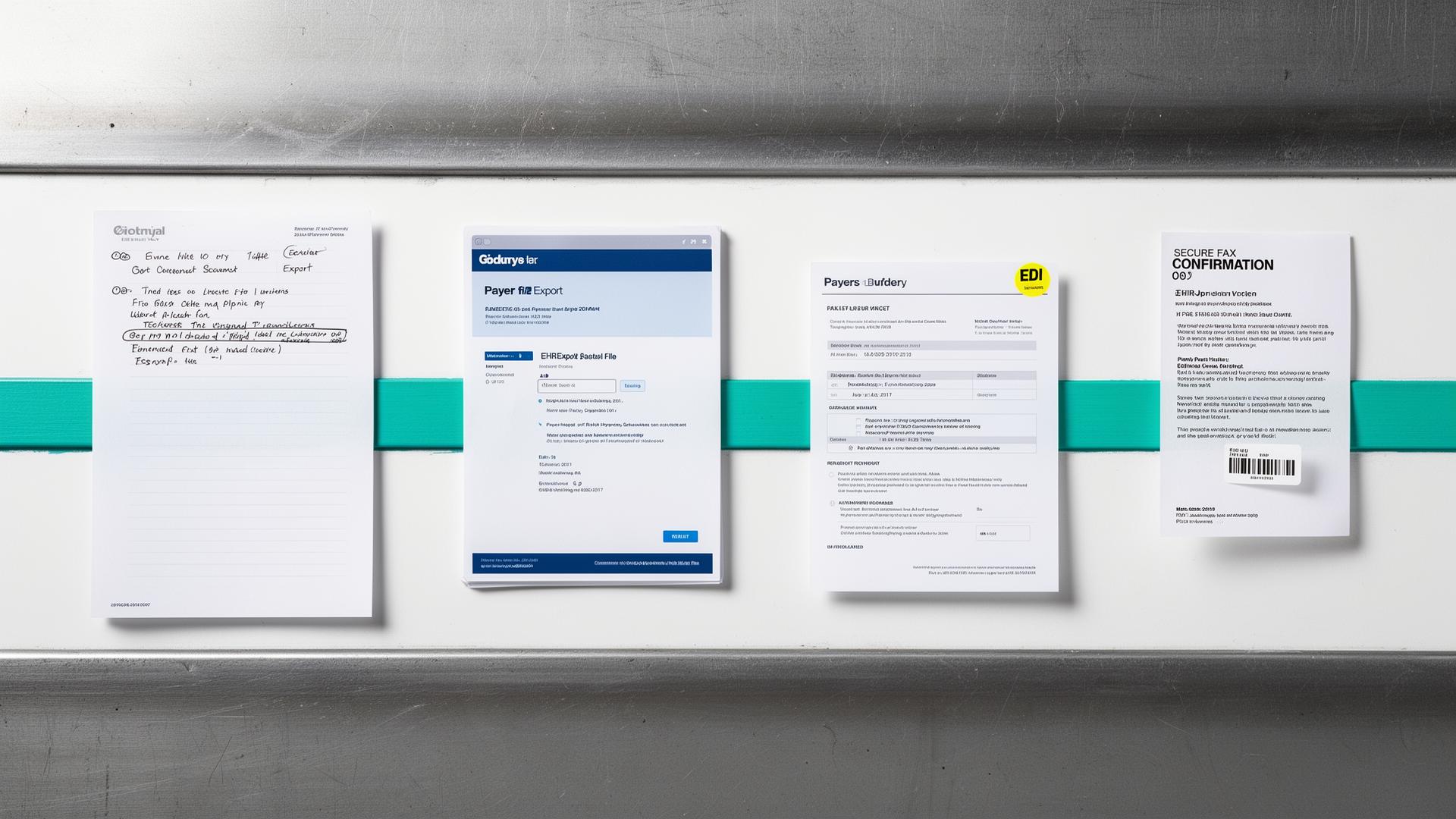
EHRs in, packets out, fallback always available.
EHRs
Read clinical notes, orders, and prior imaging where your charts already live.
- Epic / Community Health (direct API)
- Yardi (API-driven connector)
- PDF chart export (fallback)
Payer & submission workflows
Hand packets off to the portals and clearinghouses your auth team already operates.
- Availity (supported workflow)
- Payer portals (staff-operated)
- Clearinghouse EDI handoff (planned)
Documents & fallback
When an API doesn't exist, the packet still leaves on paper rails.
- PDF upload
- Secure fax
- Email intake
- CSV import
Each system, labeled honestly.
We don't claim partnerships we don't have. Every system gets a relationship label so your team knows exactly what to expect.
- Direct APIEpic / Community HealthEHR chart and order intake
- Direct APIYardiBilling and insurance profile data
- Supported workflowAvailityPayer submission workflow
- PlannedClearinghouse EDI (278 / 275)Payer submission workflow
- Supported workflowPayer portal (staff-operated)Packet template handoff
- File/document fallbackSecure faxDocument handoff
- File/document fallbackEmail intakeDocument intake
- File/document fallbackCSV / PDF uploadDocument intake
Partnership labels are published only for Epic / Community Health (Registered Vendor) and Yardi (Integrated Solution). Other system names are listed as workflow categories and do not imply endorsement, certification, marketplace listing, or a formal partnership. When an API path is not available, AuthQuire can still organize uploaded PDFs, forms, denial letters, and packet exports for staff review.
Verified direct connections
Two connections are published with a partnership label, scope, setup path, fallback, and transport security.
Epic / Community Health
Registered Vendor- Relationship
- Live direct API (FHIR) via App Orchard
- Data in
- Patient clinical notes, diagnostic orders, insurance eligibility
- Data out
- Packet submission status and updated PA status codes
- Scope
- Read-only clinical notes; write access to PA status fields
- Setup
- OAuth 2.0 / Client ID / Secret
- Fallback
- Manual PDF export/upload
- Security
- TLS 1.3; AES-256 at rest
Yardi
Integrated Solution- Relationship
- API-driven connector via Yardi Bridge
- Data in
- Billing codes, provider NPIs, insurance carrier data
- Data out
- Finalized PA packet link for billing attachment
- Scope
- Limited to Financial/Insurance profile views
- Setup
- API Key / IP Whitelisting
- Fallback
- Daily flat-file CSV export
- Security
- HTTPS/SSL; role-based access tokens
How a connection looks from inside the workspace.
Connection health is private to your team. Public AuthQuire pages never display another customer's setup status.
- Epic / Community Health (FHIR)Reads orders, notes, eligibilityConnected
- Yardi BridgeBilling codes, NPIs, carrier dataConnected
- AvailityAuth admin must approve workspaceNeeds admin
- Clearinghouse EDI handoffPlanned capabilityNot configured
- Payer portal (staff-operated)Staff uses the packet templateManual fallback active
- Secure faxEnable when neededNot configured
Every read from an EHR, every packet leaving for a payer, and every fallback document carries a reviewer-visible audit trail. AES-256 at rest and TLS 1.2+ in transit, with US-only data residency in AWS us-east-1. AuthQuire extracts evidence, drafts packets, and maps payer requirements automatically, but final clinical approval, payer submission, and appeal decisions require human action.